


Ube powder is the powdered form of purple yam (Dioscorea alata), which gives desserts a purple hue, a mild vanilla flavour with nutty notes, and a creamy texture. The purple colour comes from anthocyanins, which means the quality of the powder determines the final colour. As a manufacturer of ice cream and dessert bases, LYKKE supplies a reliable base to which ube powder can be added, making it quick and easy to create a trendy seasonal dessert for cafés, ice cream parlours and restaurants.
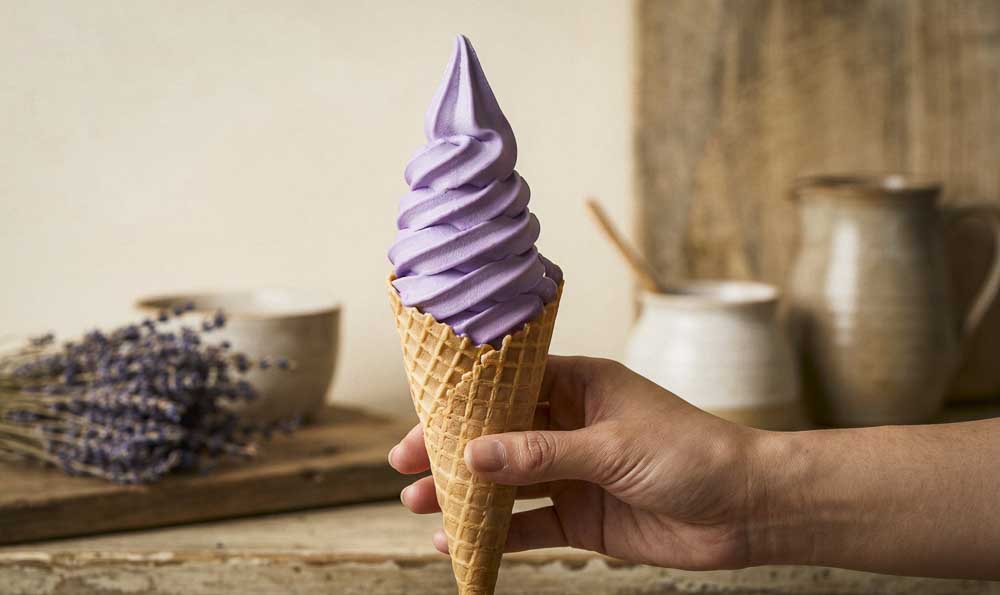
Ube is a purple variety of yam. Its botanical name is Dioscorea alata. In English, it is known as purple yam, while the powdered product is commonly sold as ube powder.
Ube is closely associated with Filipino cuisine. One of the best-known desserts is ube halaya, a sweet paste made from purple yam, milk and fat, as well as the Filipino dessert halo-halo. Ube is also used in ice cream, cakes, doughnuts, creams and drinks.
In Poland, ube is still a niche ingredient. This works to the advantage of businesses looking to make their menus stand out from standard flavours. Customers are familiar with vanilla, chocolate, strawberry and pistachio; ube offers something new without having an intense or challenging flavour profile.
Colour also matters in foodservice. Ube gives desserts a purple hue without the need to develop a recipe from scratch. Purple desserts are easy to showcase in display cabinets, on posters, in seasonal menus and on social media.
For cafés, ice cream parlours and patisseries, ube serves three purposes: it introduces a new flavour, transforms the appearance of a familiar menu item and provides a reason to communicate something new to customers (‘seasonal special’, ‘Asian-inspired’, ‘ube ice cream’).
Ube has a mild, slightly sweet and creamy flavour. Its aroma combines the sweetness of vanilla with a hint of baked sweet potato; desserts may also have a subtle nutty note.
Ube is sometimes referred to as ‘the new matcha’, but it has a sweeter flavour and none of matcha’s characteristic tea-like bitterness. In foodservice, this is an advantage: it appeals to a broad range of customers and works well in milk-based desserts, ice cream, creams, smoothies and drinks.
Unlike matcha, ube contains no caffeine. This means it can be offered at any time of day. A café can serve an ube latte without espresso, a milk-based drink, a smoothie or a dessert shake made with ice cream, giving customers colour and sweetness without a stimulating effect.
Ube has a silky, smooth and creamy texture. This is particularly important in ice cream, creams and drinks. It pairs well with milk, cream, coconut, vanilla, white chocolate, banana, mango and raspberries.
Ube’s popularity comes down to four simple factors: its colour, mild flavour, lack of caffeine and versatility in desserts. Foodservice businesses can introduce it into seasonal menus without changing the way they work.
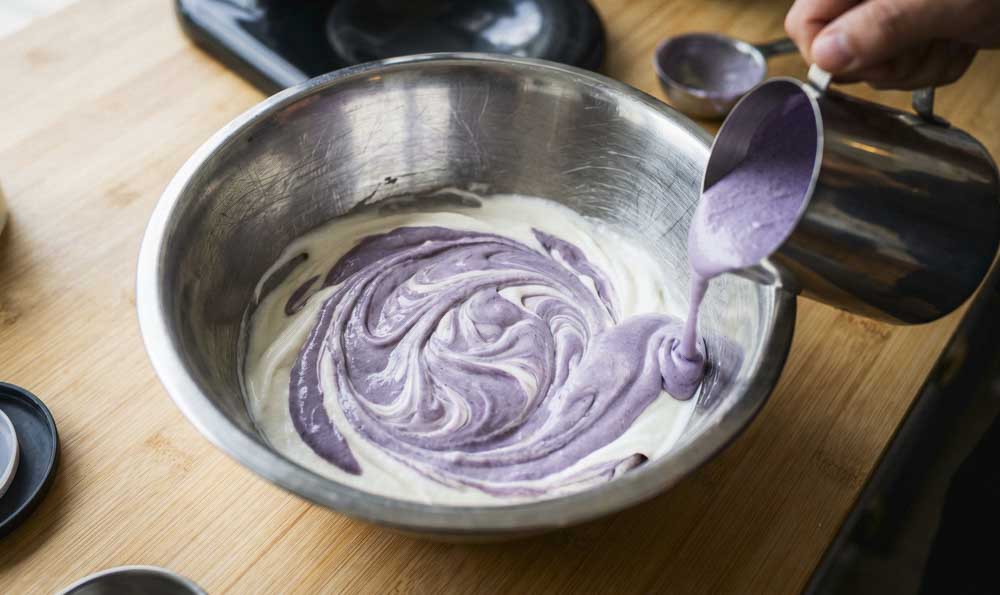
Ube powder is the powdered form of purple yam. In foodservice, it is used as an ingredient in ice cream, creams, drinks, smoothies, baked goods and desserts served in glasses or bowls. Internationally, it is commonly known as ube powder.
The powder is convenient to use: it is easy to measure, add to a recipe and use consistently from one day to the next. In professional foodservice, consistent quantities are essential for maintaining the same colour and flavour from batch to batch.
The composition of ube powder may vary depending on the supplier. In professional foodservice, check the specification for the country of origin, recommended dosage and information about additives. The highest-quality powder should be 100% natural, with no additives or added sugar; this information must be confirmed on the label or product specification.
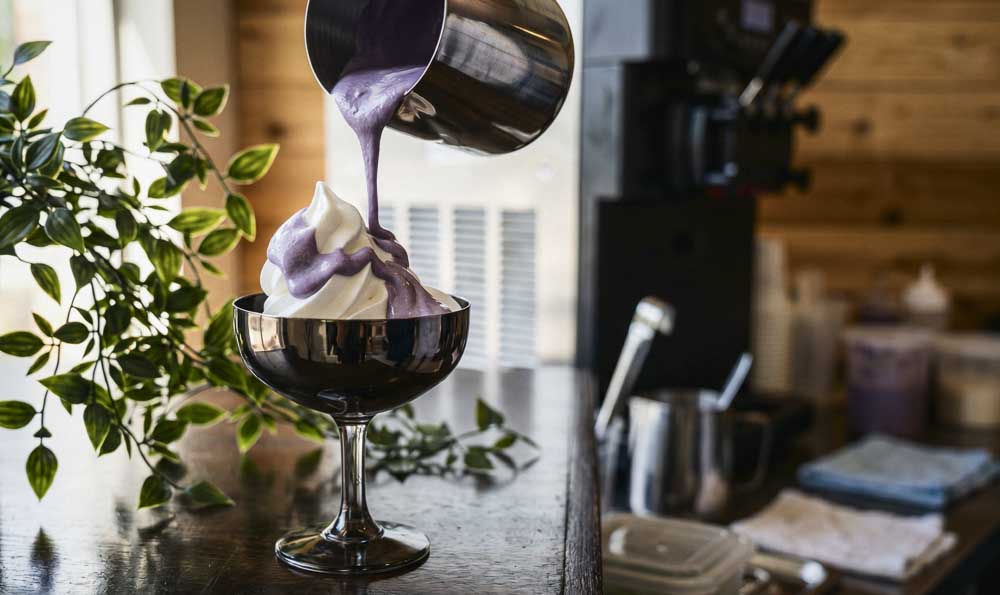
Ube’s purple colour comes from anthocyanins, natural plant pigments that are also antioxidants. Anthocyanins are sensitive to the quality of the raw material, pH and heat treatment, so the colour of the finished dessert depends directly on the quality of the powder.
One of the most common disappointments with cheap or highly processed powder is that it produces a grey or brownish colour instead of an intense purple. To avoid this in a professional kitchen:
Quality tip: if the powder turns grey rather than purple when mixed with milk, the problem lies with the raw material, not the recipe.
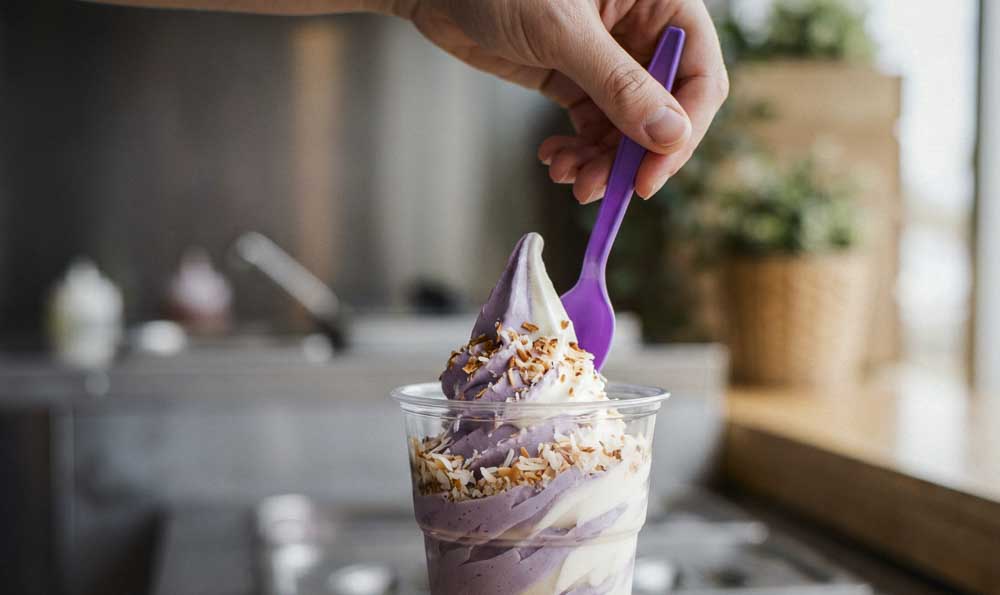
The amount depends on the desired intensity of colour and flavour, as well as the base used. The following are suggested starting points for testing (confirm against the product specification):
| Application | Base | Example dosage |
| Ice cream / ice cream base | 1 l LYKKE base | 48 g |
| Ube latte | 250 ml milk / plant-based drink | 10 g |
| Smoothie / shake | 1 serving (300 ml) | 12 g |
| Cream / cheesecake mixture | 1 kg mixture | 48 g |
Preparation: it is best to disperse the powder in a [warm / hot] liquid and blend or froth it to prevent lumps. For cold bases, mix thoroughly before freezing. Always record the quantity used so that the recipe can be reproduced consistently.
Ube powder works well in ice cream parlours, cafés, patisseries, restaurants, hotels and seasonal outlets – anywhere that serves dairy products, frozen desserts and drinks.
The simplest option is ube ice cream: simply add the powder to a light-coloured ice cream base. The result is a flavour that stands out from classic vanilla, chocolate and strawberry and pairs well with coconut, white chocolate, mango, raspberries and sesame. Ube also works very well as a colouring ingredient for whipped cream or toppings, giving the dessert a new flavour note and an eye-catching colour.
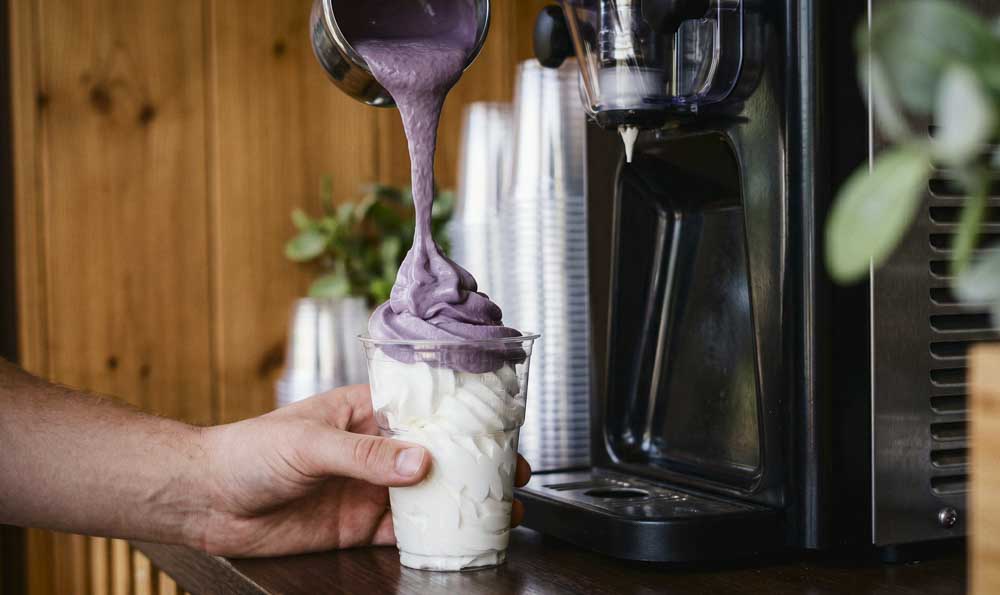
This drink can be made with milk, a plant-based drink or served iced. Ube contains no caffeine, making it an alternative to matcha; it can also be combined with espresso if the café wants to offer a coffee-based version.
Ube adds both colour and flavour to smoothies. It pairs well with banana, coconut milk, yoghurt, mango and vanilla. The drink can be offered as a breakfast, dessert or seasonal menu item.
Ube powder can be used in creams, mousses, cheesecakes, panna cotta, waffles, crêpes, pancakes and individual desserts.
Ube powder applications
| Application | Base product | Benefit for the business | Example menu item |
| Ube ice cream | LYKKE ice cream base | New seasonal flavour | Ube ice cream with mango |
| Ube shake | LYKKE ice cream + milk | Quick dessert drink | Coconut ube shake |
| Ube latte | Milk / plant-based drink | Caffeine-free drink | Iced ube latte |
| Ube smoothie | Fruit + coconut milk | Colourful daytime drink | Banana ube smoothie |
| Ube waffle | LYKKE waffles, ice cream, cream | Higher basket value | Waffle with ube ice cream |
| Dessert in a glass | Ice cream, cream, crumble | Simple display-cabinet dessert | Ube and raspberry dessert |
| Ube cheesecake | Cheesecake mixture | A new take on a classic | Ube cheesecake with white chocolate |
LYKKE products provide a base for preparing ice cream and desserts for the foodservice industry, with the aim of simplifying day-to-day operations. Ube acts as an additional ingredient that gives the dessert a premium feel and taps into current trends.
In practice, a foodservice business prepares classic ice cream using LYKKE products and then develops a version with ube powder. Because the team is working with a familiar base, staff do not need to learn a recipe from scratch:
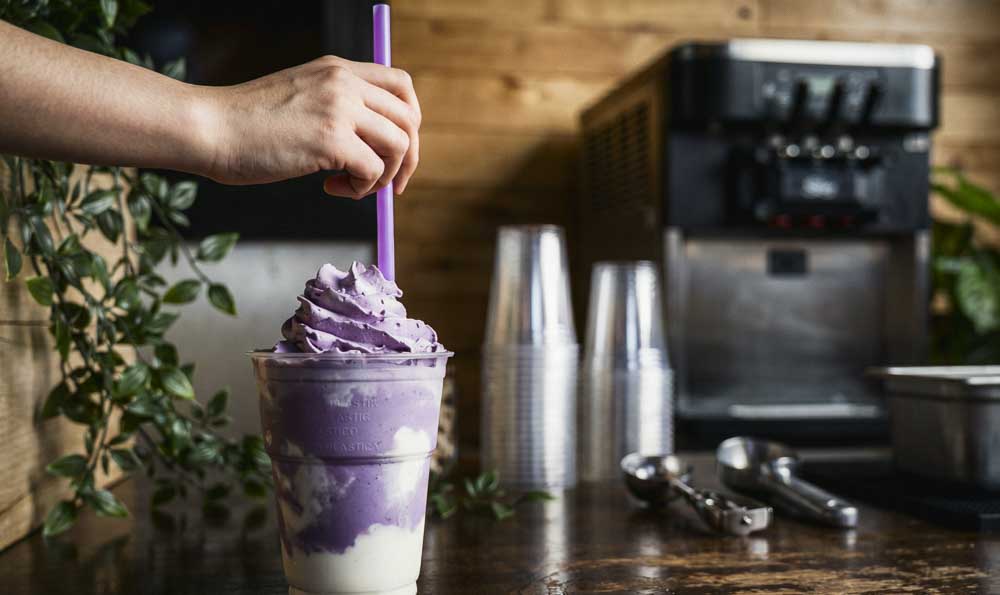
In Poland, ube still needs some explanation. This is not a disadvantage but an opportunity. A short description at the counter or on the menu can increase customer interest. An effective description includes three elements: colour, flavour and how the product is served. Customers are more likely to buy when they know whether they are ordering ice cream, a drink, a cream, a smoothie or a dessert in a glass.
The description does not need to be long. One sentence is enough:
‘Ube ice cream – a purple flavour inspired by Filipino cuisine, with hints of vanilla and nuts.’
Show a cross-section of the dessert, a serving in a glass or a layered ube latte. The purple hue is its main visual selling point, so photographs should capture the colour without excessive filtering.
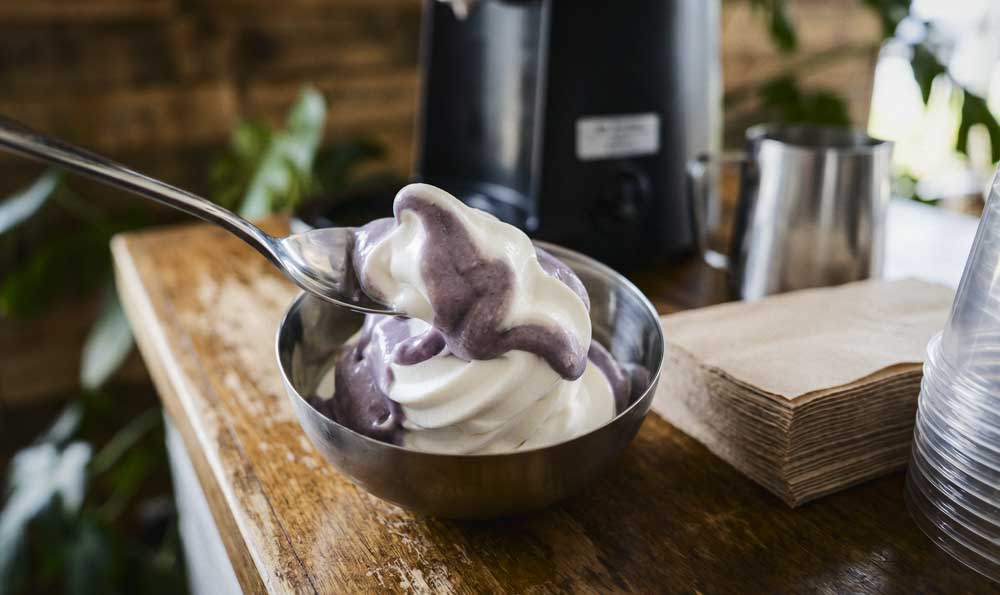
Ube powder refreshes a menu without requiring an entirely new category to be created from scratch. The business uses its existing products, equipment and procedures; only the additional ingredient, colour, description and presentation change.
The easiest approach is to start with a single item: ube ice cream, an ube shake or an ice cream dessert with ube whipped cream. In a café, an ube latte or ube smoothie is a good option to test. The item can be offered as a limited edition for 2–4 weeks, while monitoring sales, margins, customer reactions and the number of social media posts. After this period, it will be easier to decide whether ube should remain on the menu.
For a foodservice operator, what matters are tangible operational benefits: a shorter implementation time for a new menu item, easier staff training and the ability to test a seasonal product without taking on significant inventory risk. Ube can also help increase average order value: a classic waffle with ice cream has a different value proposition from a waffle served with ube ice cream, white chocolate and fruit.
*
Ube powder is the powdered form of purple yam (Dioscorea alata). In foodservice, it is used in ice cream, drinks, creams, baked goods, smoothies and desserts. It is convenient to store and easy to measure, while its purple colour comes from health-promoting anthocyanins.
Ube has a slightly sweet, creamy and mild flavour, with an aroma combining vanilla and nutty notes. It is sweeter than traditional matcha and does not have its tea-like bitterness. It pairs well with milk, coconut, white chocolate, mango, and cream or vanilla ice cream.
The amount depends on the base and the desired intensity. Start with the lower end of the range recommended in the product specification (as a guide, 10 g per 250 ml serving of latte), assess the colour and flavour, then increase the amount by approximately 20% until the desired result is achieved.
The colour comes from anthocyanins, which are sensitive to the quality of the raw material, pH and temperature. A grey or brown colour is usually a sign of cheap or highly processed powder or excessive cooking. Choose 100% natural powder and combine it with a light-coloured base.
Ube is a natural source of fibre, contains anthocyanins (antioxidants) and is caffeine-free. The powder itself contains approximately [~283] kcal per 100 g (based on labels of commercially available powders – confirm against the product specification). However, the nutritional value of the finished dessert depends on the entire recipe, including sugar, milk, cream, toppings and portion size. It is therefore worth choosing a natural base such as LYKKE ice cream.
Ube’s popularity comes from its colour, flavour and versatility in desserts. It gives ice cream, lattes, smoothies, creams, waffles and cheesecakes a purple hue. For foodservice businesses, it is an ingredient that can be added to a familiar base to create a seasonal special quickly.


