


Producing professional-quality waffles in a foodservice environment requires a combination of a consistent recipe, a high-quality waffle maker and a ready-made waffle mix. For example, the LYKKE mix requires only water and oil, and when used together with a batter dispenser and spray oil, it helps produce consistently crispy waffles, reduces waste and makes staff training much easier.

Professional waffle production is built around five essential elements: equipment, the waffle mix, accessories, procedures and quality control. According to LYKKE’s 2024 operational data, standardising the preparation process reduces batter waste by 30% and cuts the training time for new staff to as little as 15 minutes.
For seasonal businesses employing between two and six people, standardisation helps maintain consistent quality while reducing variation between batches. The five key elements include a robust cast-iron waffle maker, a ready-made waffle mix, a batter dispenser, spray oil and a documented baking time. Each of these components has a clearly defined purpose and operating procedure within the HACCP system, making staff training more effective and reducing preparation errors. A standardised process ensures that every member of staff can produce waffles to the same high standard, regardless of experience
Foodservice professionals commonly refer to food cost – the ratio of ingredient costs to the selling price of a portion – which is considerably easier to control when using a ready-made mix. Batter prepared from a pre-mixed blend simply requires water, delivers a consistent texture and high yield, while precise proportions help ensure consistently excellent baking results.
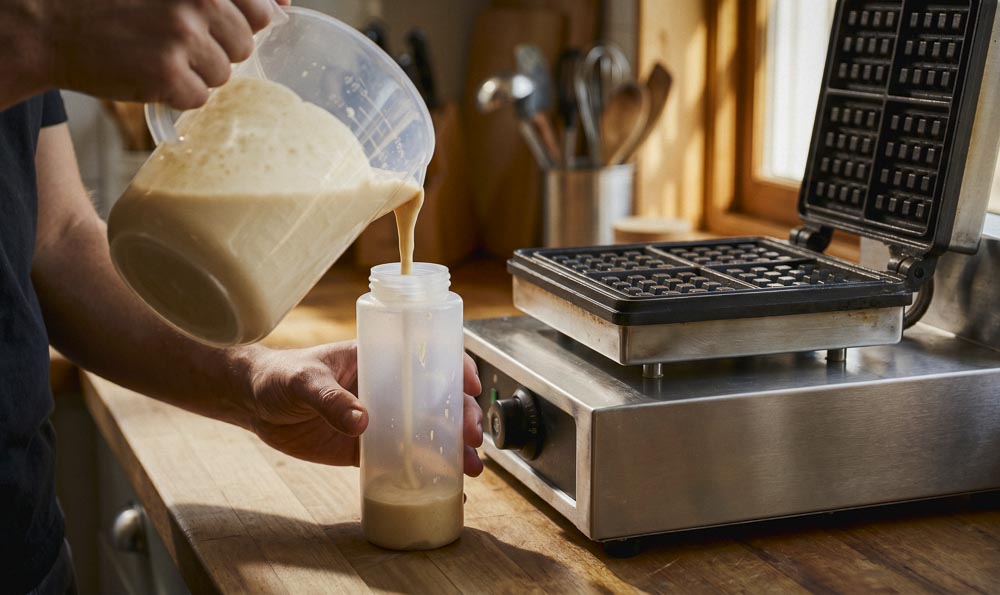
Selecting the right waffle maker is crucial for achieving consistent results in a professional kitchen. A waffle maker equipped with cast-iron plates and a power output of 1.8–2.2 kW maintains a stable temperature and produces evenly browned waffles even during busy service periods. Cast iron heats up in approximately five minutes but, once it reaches the operating temperature of around 180°C, retains heat much better than lightweight aluminium plates. A mould depth of approximately 18 mm gives waffles the ideal thickness, making them sturdy enough to hold toppings such as fresh fruit, ice cream and whipped cream
A professional waffle maker should be capable of operating for many hours each day while handling dozens of orders during a single shift. Power rating, production capacity and a clearly defined operating procedure are among the most important factors when evaluating the investment. Using two 2 kW waffle makers, it is possible to produce up to 60 waffles per hour. Equipment designed for intensive commercial use reduces the risk of breakdowns and helps maintain consistent quality throughout the season. Easy-to-clean cooking plates minimise downtime between batches, support HACCP compliance and keep the workstation clean.
| Waffle maker feature | Operational benefit | Benefit for the business |
| Cast-iron cooking plates | Superior heat retention | More consistent colour and texture |
| Power output | Stable cooking temperature | Even baking and greater reliability |
| Easy-to-clean cooking surface | Less downtime during service | Cleaner workstation |
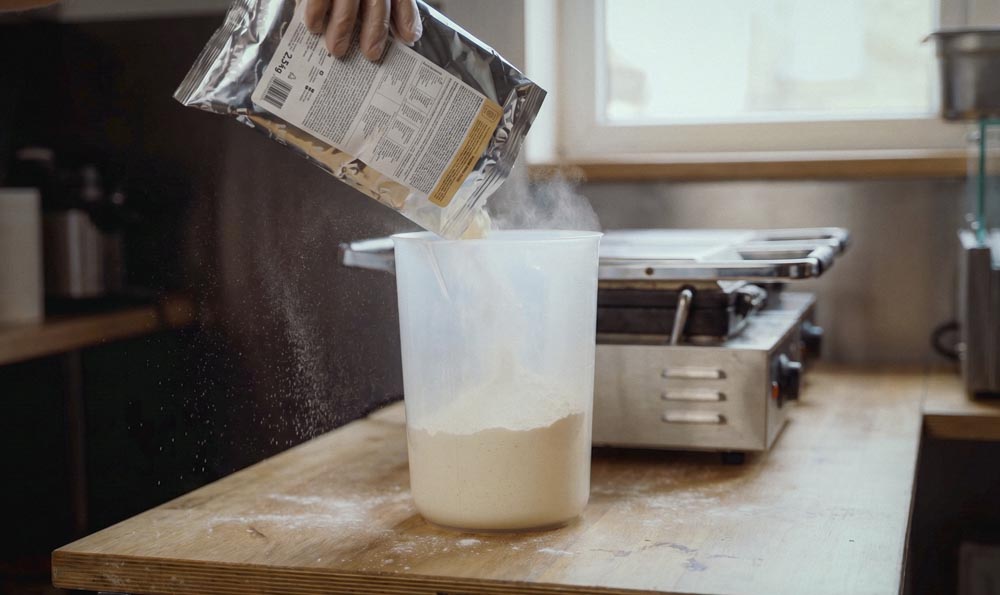
Introduced in 2022, the ready-made LYKKE waffle mix simplifies batter preparation and reduces recipe errors. A traditional waffle recipe typically requires five to seven ingredients—including flour, eggs, milk, sugar, flavouring, baking powder and oil—as well as careful measuring of each one. The LYKKE mix replaces all of these with a single base, requiring only the addition of water and oil. The recommended ratio is 1 kg of mix to 1,000 ml of water and 150 ml of oil. One kilogram of the mix yields approximately 16-17 waffles
Using a ready-made mix cuts preparation time by half and reduces dependence on the skills of individual staff members. The mix has a shelf life of around 12 months and can be stored as a dry powder, simplifying logistics and helping to reduce food cost. It contains wheat flour, sugar, raising agents and vanilla flavouring.
A consistent recipe eliminates variations in the batter and guarantees uniform flavour and texture, resulting in higher customer satisfaction and more consistent sales.
| Area | Traditional recipe | LYKKE waffle mix |
| Number of ingredients | 5–7 ingredients | One base plus water and oil |
| Quality control | Depends on the staff member preparing it | Based on a standardised recipe |
| Storage | Flour, eggs, milk and other ingredients | Dry powdered mix |
| Staff training | Requires learning ingredient ratios | Simple operating instructions |
| Risk of error | High with frequent staff turnover | Lower thanks to standardisation |
A batter dispenser and spray oil improve workstation cleanliness, speed up service and help reduce operating costs.
The batter dispenser delivers a consistent portion every time, reducing ingredient waste by approximately 15%, according to LYKKE’s 2024 operational data. It serves three key purposes: minimising product waste, keeping the workstation tidy and ensuring precise portion control. It allows operators to measure the exact amount of batter, something that is difficult—or even impossible—to achieve using traditional tools such as a ladle. In addition, batter poured from a ladle is more likely to drip, creating unnecessary mess around the waffle maker.
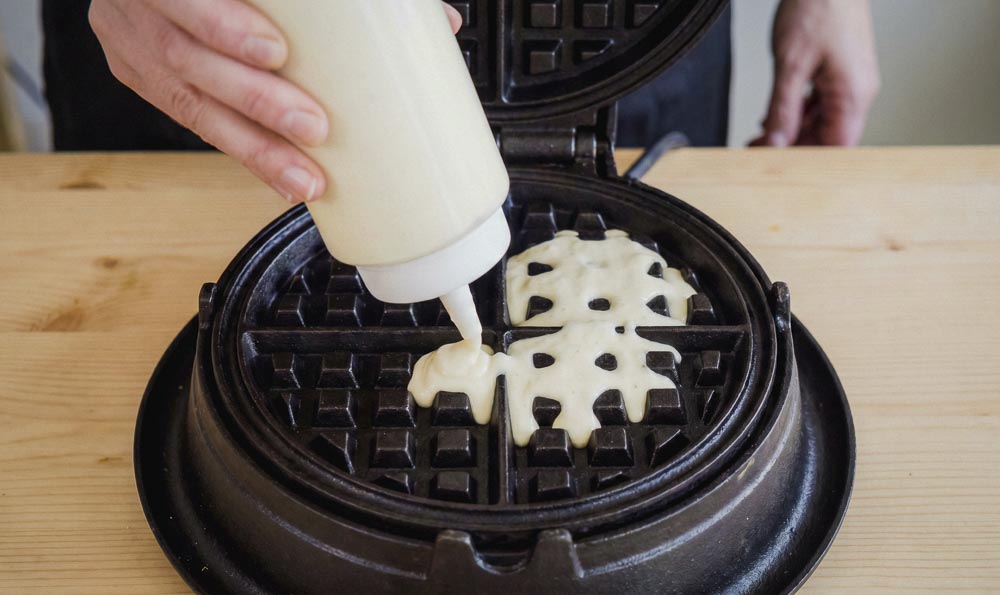
Using ready-made solutions also shortens staff training time, improves the efficiency of onboarding new employees and helps maintain consistent product quality. Spray oil applies a thin, even coating of oil to the waffle plates. According to LYKKE’s 2024 operational data, this method reduces oil consumption by up to 30%, minimises smoke and residue, and makes the equipment easier to clean.
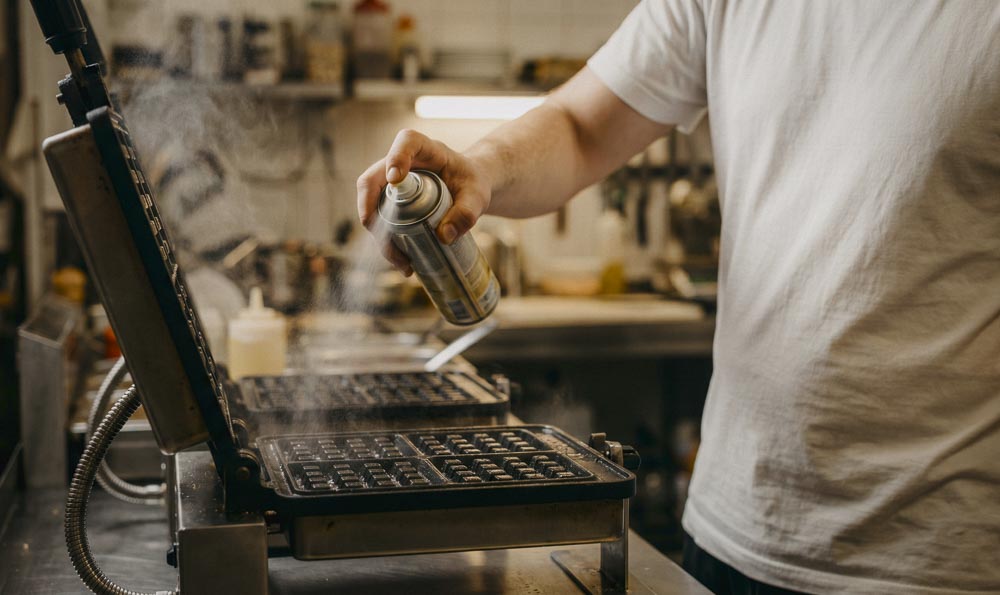
A thin coating of oil prevents the batter from sticking while ensuring an even golden colour. This simple solution supports HACCP compliance and helps reduce food cost by lowering oil consumption. Together with the batter dispenser, it forms a practical accessory system that supports efficient waffle preparation.
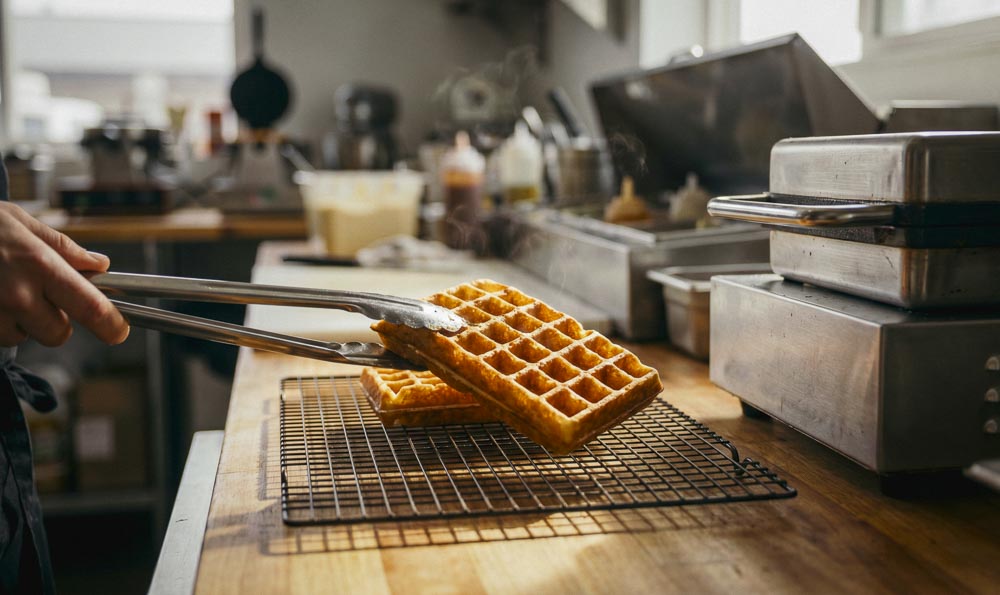
Precise control of temperature, batter quantity and baking time is essential for producing perfectly crisp waffles. The following steps help ensure consistent results every time.
| Step | Parameter to monitor | Issue to avoid |
| 1. Preheating | Stable operating temperature | Pale, soft waffles |
| 2. Oiling the plates | Thin, even layer of spray oil | Batter sticking or an overly greasy surface |
| 3. Dispensing the batter | Consistent portion size | Overfilling the mould |
| 4. Baking | Recommended baking time of approximately 3–4 minutes | Undercooked centre |
| 5. Cooling | Moisture evaporation | Loss of crispness due to trapped moisture |
Waffles are highly profitable thanks to margins of 80–85%. The cost of preparing a basic waffle topped with icing sugar is around PLN 1, while the retail price typically ranges from PLN 10 to PLN 15, creating a substantial margin. Food cost, the ratio of ingredient costs to the selling price of a portion is typically between 15% and 20%. It remains low because much of the product’s value comes from the toppings rather than the waffle itself. Extras such as fresh fruit, whipped cream or ice cream can increase the value of an order by as much as 20%.
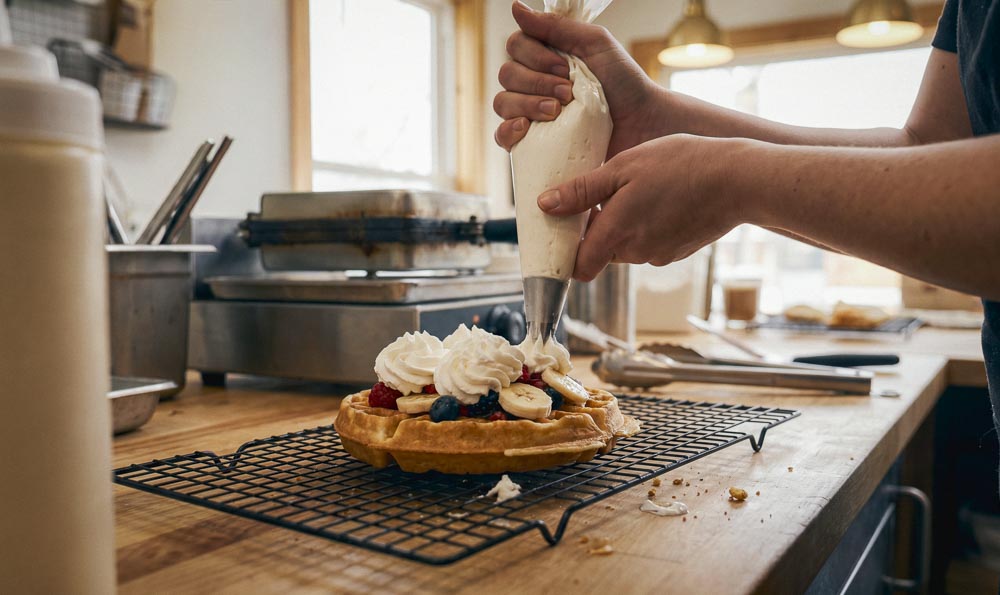
The aroma of freshly baked waffles acts as a natural sales driver, attracting customers from the surrounding area. In locations with heavy foot traffic, the smell of freshly baked waffles can be more effective than visual advertising, increasing sales without generating additional marketing costs. It is a marketing tool that works equally well in cafés, restaurants, food trucks and seasonal kiosks.
Waffles are an all-year-round product. During the summer, they are popular with ice cream and fresh fruit, while in autumn and winter they pair perfectly with warm toppings. This seasonal flexibility makes waffles an excellent addition to any menu. They help maintain ice cream sales during cooler months while continuing to attract customers with the irresistible aroma of freshly baked waffles throughout the year. Cross-selling waffles alongside ice cream, coffee or other desserts extends the selling season and increases the average transaction value.
Consistent results are achieved by using a ready-made waffle mix, a cast-iron waffle maker with a minimum power output of 1.8 kW, and by following a standardised baking procedure. A fixed recipe and staff trained to follow the same operating instructions minimise variations between batches.
The LYKKE waffle mix requires only water and oil, simplifying preparation and reducing production time by approximately 50%. Its standardised recipe eliminates measuring errors while ensuring consistent flavour and texture.
For commercial use, a waffle maker with cast-iron plates and a power output of 1.8–2.2 kW offers the best performance, maintaining a stable cooking temperature during busy service periods. A model with easy-to-clean plates and a mould depth of approximately 18 mm produces evenly baked waffles with a consistent golden colour.
A wire cooling rack allows excess moisture to evaporate from the hot waffle for around 30 seconds, helping it remain crisp. Placing the waffle directly onto a work surface or plate traps steam underneath, causing the waffle to soften.
Spray oil applies a thin, even layer of oil to the waffle plates, reducing oil consumption by up to 30%. Traditional brushing methods produce less consistent results while creating more mess and waste.
Yes. Waffles improve profitability because they are made from simple ingredients yet generate margins of 85–90%. They also extend sales beyond the warmest months of the year, while pairing waffles with ice cream increases the average order value.
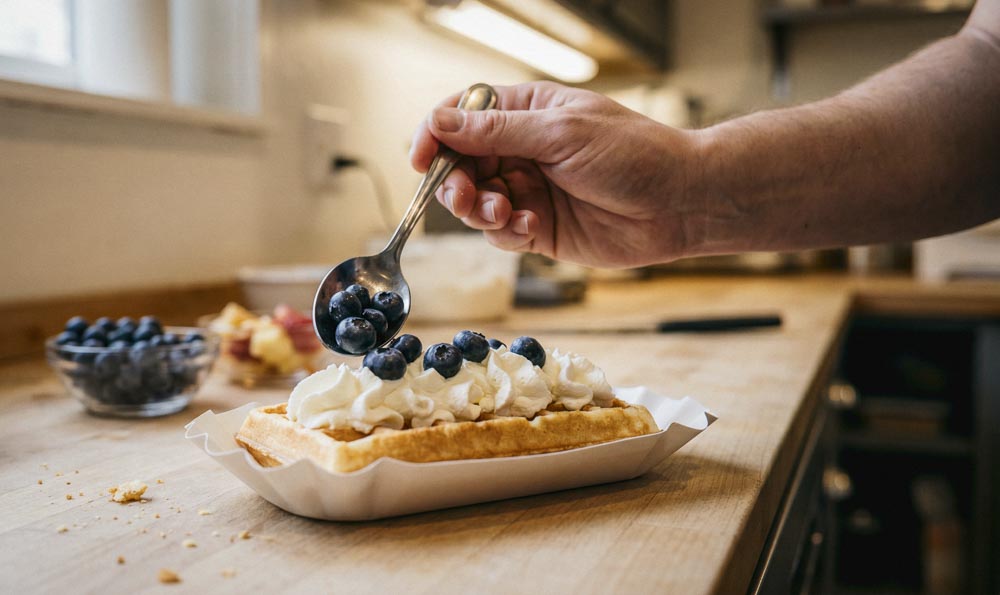
Waffles can be served with icing sugar, whipped cream, fruit sauce, jam and fresh fruit such as strawberries, blueberries and raspberries. Nuts, dried fruit and decorative toppings also make it easy to tailor the menu to customer preferences.
Article updated: June 2026.


